History Of Esoteric


The purpose of this chapter is to bring attention to esotericism and magic, which are often overlooked and misunderstood. Many individuals struggle with self-awareness finding their true desires, while others fear living a different life. My goal is to provide guidance and support for those seeking personal growth and understanding in these areas.

A Witch who became Queen
Caterina De Medici Queen of France
Catherine's talisman
Caterina de' Medici, Queen of France, has long been shrouded in an "evil aura" in French historiography.
Depicted as cold, jealous, vindictive, and power-hungry, she was accused of being a witch, poisoner, and nymphomaniac - an unscrupulous woman who would stop at nothing to achieve her goals.
However, a recent exhibition sheds new light on Caterina's story. Among the artifacts displayed was a plaque-like jewel that appears to have been a talisman designed for her by Nostradamus.
Talismans, objects prepared to attract benevolent astral forces, were often engraved with formulas and representations.
This particular talisman, preserved in the Bibliothèque Nationale de France, features Jupiter, Ganymede's eagle, a demon with the head of Anubis, the goddess Venus, and the name of the demon Asmodeus - the demon of carnal desire, often invoked to conquer another's love.
Rather than a bloodthirsty monster, this intimate talisman suggests Caterina was a woman desperately seeking to be loved, despite being an orphan and pawn in political games from a young age.
By examining artifacts like this talisman, a more nuanced understanding of the much-maligned Caterina de' Medici emerges - one of a complex woman navigating the treacherous waters of power and influence in 16th century France.


Turin is one of the most important cities of esotericism
Turin's reputation as the Italian capital of esotericism, occultism, magic, and Satanism is deeply rooted in the city's long and captivating history.
Countless monuments, architectural elements, and even the very layout of Turin itself are said to be imbued with profound esoteric and Masonic symbolism, making it a veritable hub of mystical and supernatural intrigue.
Figures connected to the occult, from the Savoy dynasty with their longstanding interest in magic, to the legendary Nostradamus, have all been drawn to this enigmatic city.
According to esoteric beliefs, Turin is divided into distinct realms of light and darkness.
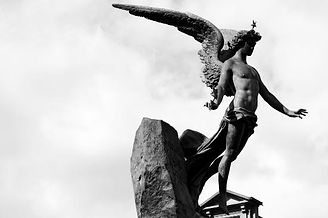
The "light" is embodied by the grand Piazza Castello, while the "darkness" is centered around Piazza Statuto. This clash of benevolent and malevolent forces is physically manifested in the monuments that occupy these spaces - the angel statue in Frejus Tunnel Memorial gazes defiantly towards the rising sun, while Piazza Castello houses the Royal Palace, the epicenter of positive energy.
Delving even deeper underground, esotericists claim that three mystical alchemical caves, brimming with concentrated spiritual power, lie beneath the Piazza Castello.
Turin's status as a nexus of the occult is further cemented by its position as one of only three cities that form an alchemical "white magic" triangle, alongside Prague and Lyon. Conversely, it is also considered one of the three vertices of a "black magic" triangle, along with London and San Francisco (or perhaps even Chicago, according to some). Shrouded in superstition and dark legend, sites like the Palazzo Trucchi di Levaldigi, where unsolved murders are said to have occurred, and the Vallis occisorum, the former site of executions, add to the city's air of esoteric mystique. Truly, Turin's rich tapestry of occult history and symbolism has earned it the moniker of the "City of the Devil."